Integrated Practices | Comprehensive Care
|
In this issue we feature:
|
During April and May 2026, LUGPA expanded federal and state advocacy efforts focused on Medicare reimbursement reform, site-neutral payment policy, cancer care access, utilization management reform, and preservation of physician-led specialty care.
Key advocacy activities included:
- CMS comment letters and federal regulatory submissions
- Congressional engagement on Medicare reimbursement and oncology legislation
- Expansion of state advocacy infrastructure
- Policy analysis involving drug pricing, 340B reform, AI oversight, and utilization management
- Grassroots mobilization campaigns opposing harmful state reimbursement legislation
- Preparations for LUGPA’s May 2026 Congressional Fly-In
A central theme across all efforts remained LUGPA’s opposition to policies accelerating healthcare consolidation and shifting care from lower-cost physician-led community practices into higher-cost hospital-owned systems.
|
Organizational & Advocacy Development
|
Expansion of State Advocacy
LUGPA expanded its advocacy operations with the hiring of Ben Vimont as State Advocacy Coordinator to strengthen state-level healthcare policy engagement.
Responsibilities include:
- State legislative monitoring
- Grassroots mobilization
- Coalition outreach and development
- Member engagement initiatives
- State-level reimbursement and scope-of-practice advocacy
This expansion reflects increasing state activity involving reimbursement policy, utilization management, AI regulation, and outpatient care delivery.
|
CMS & Federal Regulatory Advocacy
|
Stark Law Exception Request: Physician-Supervised Dispensing of Oral Anticancer Drugs
In May, LUGPA met with Centers for Medicare & Medicaid Services (CMS) senior leadership to formally request a Stark Law exception permitting physician-supervised dispensing of oral anticancer drugs in community urology and oncology practices. This is our third meeting on the issue and we seem to be getting traction on a narrowed exception focusing on just oral anticancer drugs with some guardrails.
This initiative aims to:
- Improve care coordination and continuity for patients receiving oral therapies
- Enhance medication adherence and patient convenience
- Reduce fragmentation of care between specialty practices and external pharmacies
- Support the sustainability of independent, physician-led practices
LUGPA emphasized that updating Stark Law regulations in this area would remove unnecessary barriers, lower costs for patients and the Medicare program, and help preserve access to high-quality, community-based cancer care.
The proposed exception would enable integrated practices to safely dispense these critical therapies under direct physician supervision while maintaining strong program integrity standards. LUGPA will continue to engage CMS and provide supporting data as the agency reviews this request.
Draft LCD – Urine-based Biomarkers for Microhematuria (DL40380)
On May 14, 2026, Novitas and First Coast Service Options (FCSO) issued a Proposed LCD shifting from non-coverage to limited coverage for Cxbladder and other urine-based biomarkers (UBBs) in risk-stratifying patients with microhematuria (MH) for urothelial carcinoma (UC).
This positive policy change follows long-standing advocacy by the AUA, Pacific Edge Diagnostics, and LUGPA (including prior RFI comments to OMB/CMS on arbitrary non-coverage policies). The comment period runs through June 27, 2026.
LUGPA views this as a meaningful win for providers and patients, supporting greater access to non-invasive diagnostic tools in community urology settings.
Site-Neutral Payment Reform
Following the April 2026 House Ways & Means Committee hearing on healthcare costs, LUGPA highlighted growing bipartisan momentum for site-neutral payment reform.
LUGPA emphasized that:
- Hospital outpatient departments often receive substantially higher reimbursement for identical services
- Payment disparities drive vertical consolidation
- Beneficiaries face higher coinsurance obligations in hospital-owned settings
- Site-neutral reforms could generate significant Medicare savings while preserving access and quality
LUGPA continues supporting equal reimbursement for clinically equivalent services regardless of care setting.
No Surprises Act & IDR Updates
On May 28, 2026, HHS, Labor, Treasury, and OPM finalized the Federal Independent Dispute Resolution (IDR) Operations rule under the No Surprises Act. The final rule streamlines batching (up to 50 items), reduces administrative fees, accelerates eligibility determinations, and adds new disclosure and coding requirements.
LUGPA Implications: These changes should lower barriers and improve efficiency of the IDR process for independent practices. LUGPA will monitor implementation and payer compliance.
|
Facilitating Access to Innovation in Cancer Care Act (H.R. 8032)
LUGPA formally endorsed H.R. 8032, legislation requiring Medicare to separately reimburse certain FDA-approved oncology therapies currently subject to packaged payment policies.
Advocacy focused on:
- Access to innovative oncology treatments
- Sustainability of community cancer care
- Bladder cancer treatment access
- Reimbursement barriers involving blue light cystoscopy with Cysview
Provider Reimbursement Stability Act (H.R. 8163)
On May 20, LUGPA sent a letter to all members of the House Committee on Ways and Means supporting the bipartisan Provider Reimbursement Stability Act (H.R. 8163). The legislation would modernize key components of the Medicare Physician Fee Schedule (MPFS), including increasing the outdated budget neutrality threshold, improving reimbursement accuracy through claims-based data reconciliation, requiring regular practice expense updates, and limiting large annual conversion factor swings.
In the letter, LUGPA emphasized that ongoing reimbursement instability continues to place significant pressure on independent physician practices and contributes to consolidation across healthcare. LUGPA noted that the bill represents an important step toward improving payment predictability and preserving patient access to physician-led specialty care.
The bill was reported out of the committee with an overwhelming bipartisan vote, and we are working with the committee to advance it to floor consideration, possibly in Lame Duck.
Medicare Drug Negotiation & Part B Payment Advocacy (H.R. 4299)
LUGPA and coalition partners continued engagement surrounding H.R. 4299, legislation designed to protect provider reimbursement for Medicare Part B drugs subject to IRA negotiation policies.
Coalition discussions emphasized:
- Strong and growing bipartisan interest
- Concerns regarding implementation disruptions
- Outreach to Blue Dog Coalition, New Democrat Coalition, and Rural Caucus members
- Expanded media and congressional engagement efforts
LUGPA continues monitoring impacts on:
- Community oncology sustainability
- Physician reimbursement stability
- Access to physician-administered therapies
- Independent specialty practice viability
Drug Pricing & Healthcare Affordability
Every Dollar Counts Act
LUGPA analyzed legislation requiring insurers to count eligible cash-pay prescription purchases toward deductibles and out-of-pocket maximums.
Potential implications included:
- Improved medication adherence
- Greater pricing transparency
- Reduced patient financial burden
- Increased pressure for PBM reform
|
Prior Authorization & Utilization Management Reform
Safe STEP Act (H.R. 5509 / S. 2903)
LUGPA strongly supported the bipartisan Safe STEP Act establishing standardized federal step therapy exception requirements and insurer response timelines.
Advocacy emphasized:
- Preventing medically unnecessary treatment delays
- Preserving physician autonomy
- Reducing administrative burden
- Improving patient access to specialty therapies
Prior Authorization Standardization Efforts
LUGPA monitored insurer-led efforts to standardize prior authorization requirements and expand electronic PA systems.
While insurers reported reduced volume and increased automation, LUGPA emphasized:
- Significant administrative burdens remain
- Delays and denials continue
Electronic systems alone do not resolve overutilization concerns
|
FDA & Emerging Technology Policy
|
FDA Real-Time Clinical Trials Initiative
LUGPA examined FDA pilot programs involving AI-enabled Real-Time Clinical Trials.
Potential implications include:
- Expanded participation opportunities for community practices
- AI-enabled safety monitoring
- Decentralized research participation models
- Improved patient recruitment and monitoring
LUGPA emphasized the importance of independent physician inclusion, appropriate AI safeguards, and patient privacy protections.
Congressional Inquiry into “Surveillance Pricing”
LUGPA monitored congressional investigations into AI-driven personalized pricing practices and identified potential future implications involving:
- Healthcare AI oversight
- Pharmacy pricing transparency
- Algorithmic pricing regulation
- Patient data privacy protections
|
State Advocacy & Grassroots Mobilization
|
Opposition to New York “Fair Pricing Act” (A.2140-A)
LUGPA launched a grassroots campaign opposing New York Assembly Bill A.2140-A, which would cap certain outpatient commercial reimbursement rates at 150% of Medicare non-hospital rates.
LUGPA warned the legislation could:
- Depress physician reimbursement
- Accelerate hospital consolidation
- Reduce access to community-based specialty care
- Shift care into higher-cost hospital settings
Members received customizable advocacy letters, talking points, legislator outreach guidance, and grassroots engagement resources.
|
May 2026 Fly-In Strengthens Congressional Support for LUGPA Priorities
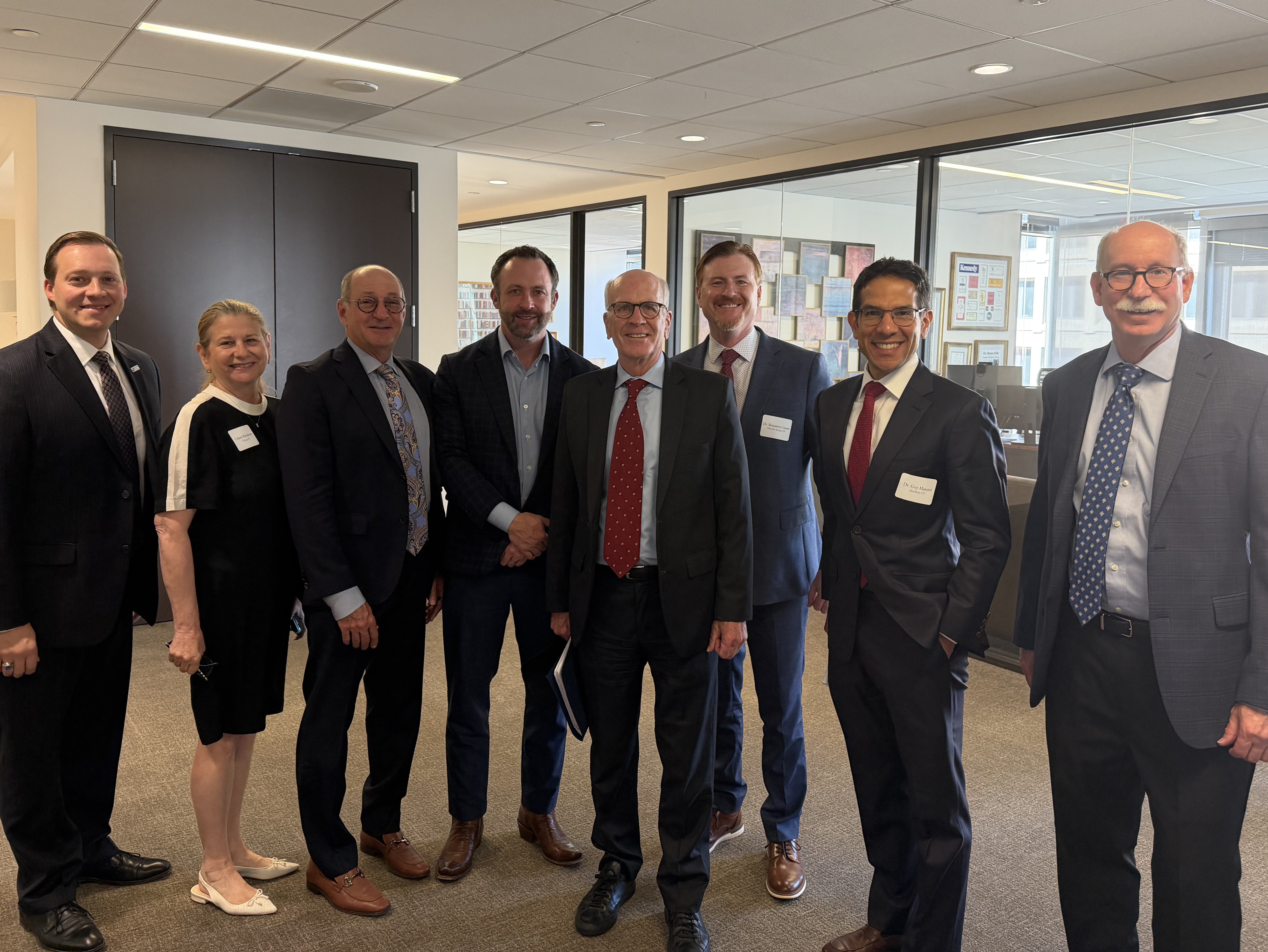
LUGPA physician leaders and practice administrators traveled to Washington, D.C., on May 20–21 for a successful congressional fly-in focused on physician payment reform, protecting patient access to physician-administered therapies, and advancing policies that support independent specialty practices.
|
LUGPA members meet with Senator Peter Welch (D-VT) at a breakfast in DC.
|
Over two days, LUGPA met with more than 20 Senate and House offices, including members and staff from the House Ways & Means Committee, House Energy & Commerce Committee, and Senate Finance Committee. Meetings included discussions with the offices of Senators Peter Welch, Adam Schiff, Michael Bennet, Mark Warner, Chris Coons, Tim Kaine, and others, along with Representatives Aaron Bean, Adrian Smith, Mike Rulli, Cliff Bentz, Erin Houchin, Scott Peters, Mike Levin, Raul Ruiz, and Jahana Hayes.
Advocates urged support for the Provider Reimbursement Stability Act (H.R. 8163) and the Protecting Patient Access to Cancer and Complex Therapies Act (H.R. 4299), and discussed site-neutral payment reform, 340B transparency, and the growing impact of healthcare consolidation on community-based care.
Several meetings generated positive momentum. Representative Aaron Bean met directly with the group during a committee markup, while multiple congressional offices expressed interest in H.R. 8163 and H.R. 4299. Senator Peter Welch demonstrated a strong understanding of physician payment challenges and discussed the possibility of future Senate action related to reimbursement reform.
The fly-in also included political engagement opportunities with key healthcare leaders, including events with House Energy & Commerce Committee Chairman Brett Guthrie and Representative Kevin Hern. LUGPA additionally met with Representative Raul Ruiz and thanked Representative Adam Gray for his leadership on H.R. 4299.
The strongest takeaway from this year's fly-in was the growing bipartisan recognition that physician payment instability, consolidation pressures, and patient access challenges require congressional attention. The meetings reinforced LUGPA's position as a leading voice for independent specialty practices and provided valuable opportunities to advance the organization's advocacy priorities as Congress continues work on Medicare reimbursement and healthcare reform.
Participating Physicians and LUGPA Leaders
Key physician participants and leaders included:
- Dr. Guy Manetti
- Dr. Scott Sellinger
- Dr. Edward Cohen
- Dr. Josh Langston
- Dr. Benjamin Coons
- Nathan Diller
- Celeste Kirschner
Participants shared real-world examples illustrating how ongoing instability in reimbursement, consolidation pressures, and access challenges directly affect practices and patients across communities nationwide.
A full recap of the event is now available on LUGPA’s website.
|
Share Your Story —
Amplify the Voice of Urology
|
Have reimbursement issues, administrative burden, patient access, workforce challenges, or sustainability affected your practice?
LUGPA is renewing its call for member stories to strengthen our advocacy at the federal and state levels. Policymakers respond to real-world impact, and your experiences with the Medicare Physician Fee Schedule, MACRA, prior authorization, step therapy, telehealth, workforce shortages, genetic testing, and other coverage and reimbursement challenges bring urgency and credibility to our message.
Personal stories from physicians and patients help humanize the data, influence legislative conversations, and build support among local lawmakers. Whether you submit a brief written account or record a short video, your perspective can directly shape policy discussions affecting independent urology.
Members may also record stories at upcoming LUGPA meetings as part of our expanded advocacy outreach.
To participate, submit your story to Matthew Glans. Please ensure all shared patient information complies with HIPAA requirements and includes appropriate consent.
Your voice matters, and together, we can ensure independent urology is heard loud and clear.
|
LUGPA | 875 N. Michigan Avenue, Suite 3100, Chicago, IL 60611
Catch up on LUGPA's activities and make the most of your membership
by visiting us online at www.lugpa.org
|
|

 |